
Dirty Reiver Gravel Event- Equipment and Bike Set Up
In our second post about the Dirty Reiver gravel event we talk through out tips and tricks for how to set up your bike and kit for the event. The right tyres, clothing and tools can be the difference between a fun day out and a long walk home in a gravel event!
Our equipment set up advice for gravel cycling events
Tyres: choose tyres that balance speed, grip and durability for the Dirty Reiver’s mixed surfaces. A smoother tread will be faster rolling on less technical sections but will be make handling harder on the rough descents. A higher volume tyre with tread will be quicker on the descents allowing you to relax and save energy but there will be a trade off for speed on the flat non-technical sections. We offer advice based on our clients technical and physical ability and their goals for the event.
Tubeless setup: run tubeless with a reliable sealant and correct pressures for the terrain and your weight. Tubeless reduces pinch-flat risk and allows lower pressures for better grip and comfort on rough sections. Be sure to bring appropriate tubeless repair tools.
Hydration and nutrition carry: use a CamelBak (or similar hydration pack) to ensure you’ll have enough water/energy mix for the duration of the event. Bottles are ok but often bounce out on rough terrain and this can have a big impact during such a long event. A pack also be useful for storing layers, tools and spares. Ensure your hydration system is comfortable and practised in training rides.
Tools and spares: pack a compact multi-tool, tyre levers, pump or mini-CO2, a couple of spare tubeless plugs, a small roll of tape or patch kit and a spare tube. Securely stow essentials in a saddle bag, frame bag or pack so they’re accessible during the ride.
Clothing and layering: choose breathable, weather-appropriate kit. The conditions around Kielder can be variable so prepare accordingly with a lightweight packable waterproof or windproof. Check the forecast during the week and day before the event to work out what kit you will start the event in. It’s likely to be colder at the start and warm up during the day so have layers that are easily removable. Sunglasses are also important for keeping the mud/grit out of your eyes.
Post event: make sure you have a plan for when you finish the event! Nutrition for straight after the ride, bags for used kit and rags to wipe down the bike will make life a lot easier! It’s a long drive home for most people so plan ahead and think if there is anything you’ll need directly after.
Conclusion
There is no perfect solution and our advice will vary depending on the technical ability and personal preference of the individual we are working with. There is also an element of luck when it comes to punctures and the weather but all you can do is improve your chances of things going to plan!
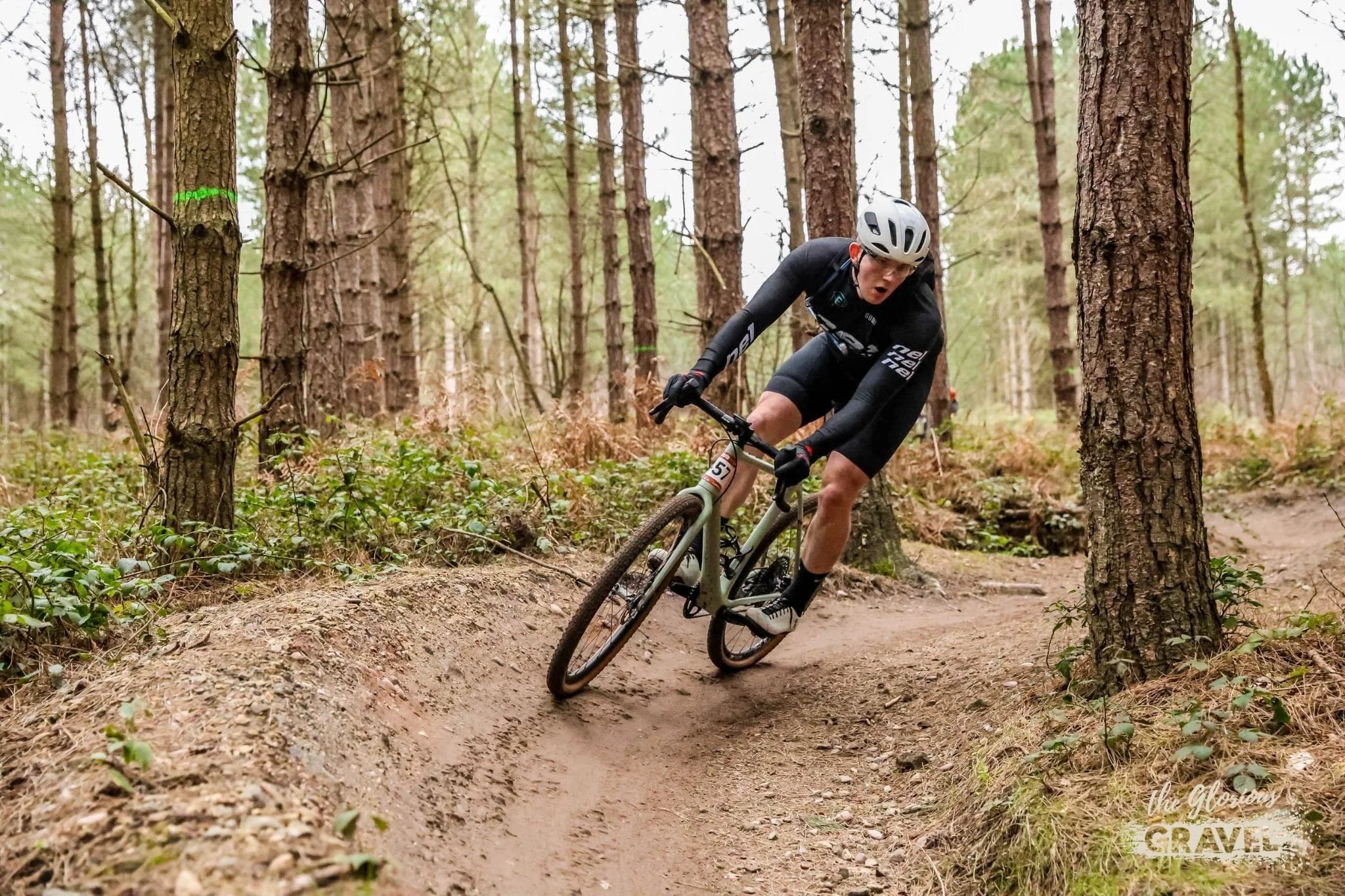
Hugh Osborne at the Glorious Gravel Cycling event in Sherwood Forest 2026
